High-Temperature Galvanizing at Lehmann for the Most Demanding Applications
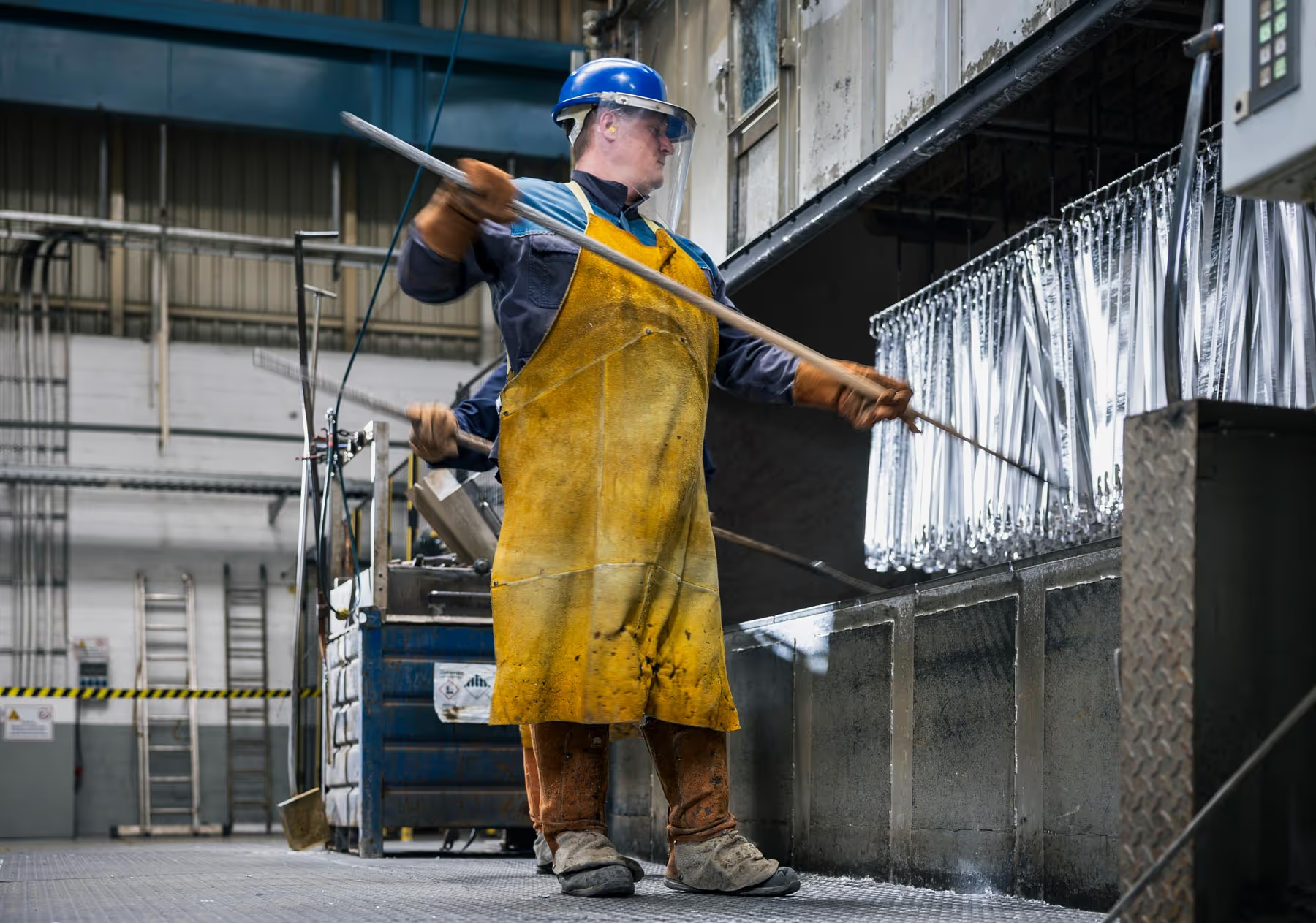
At Lehmann's Berlin plant, components are galvanized using the high-temperature process. The ceramic-heated kettle produces a particularly fluid zinc melt, resulting in uniform coating layers.
How precision is achieved
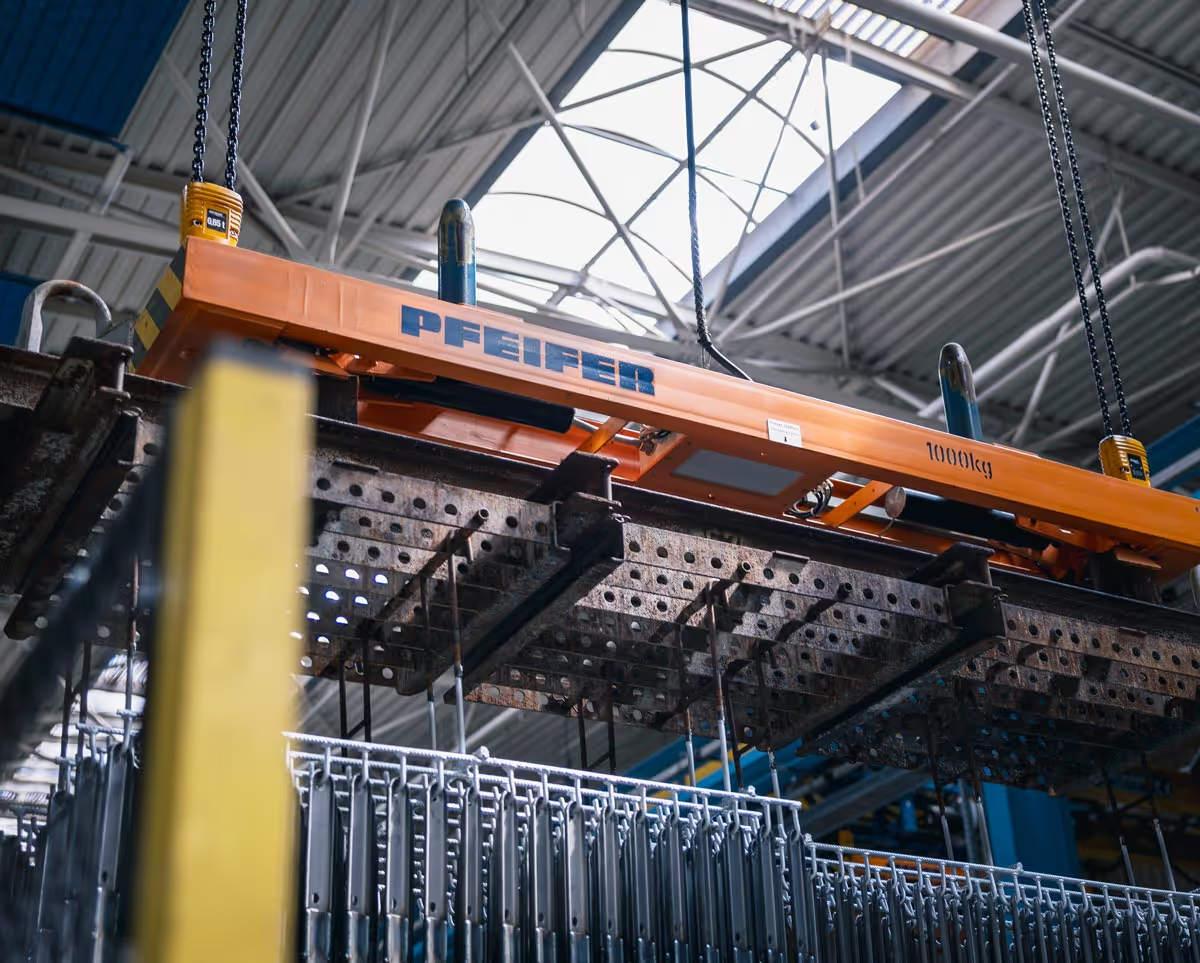
In the Berlin galvanizing plant, the process follows a clear sequence: components hang from the overhead crane, moving slowly into the liquid zinc bath. At temperatures between 560 and 620 °C, the zinc changes its physical properties — it becomes more fluid, runs off more cleanly, and forms an especially homogeneous layer. This precise control is the decisive difference from conventional hot-dip galvanizing.
The advantages are immediately visible. Surfaces are smooth, free from zinc spikes or accumulations. Threads remain clean; weld seams do not grow over uncontrollably. Even serial numbers or markings critical for traceability remain legible. These characteristics make HTG particularly attractive for industries where accuracy matters — automotive, rail, and energy infrastructure among them.
Assembly behaviour also improves. Bolts engage more precisely, components fit together more easily and uniformly. Post-processing steps such as grinding or shot-blasting are frequently unnecessary. For manufacturers working to tight tolerances or assembling complex sub-systems, this translates into valuable time savings and greater process reliability.
The ideal foundation for multi-layer systems
A further advantage is surface quality. The uniform layer structure of HTG makes it the ideal base for a subsequent powder coating in a duplex system. The coating adheres better, and the finished product combines the robust corrosion protection of zinc with the aesthetic and functional enhancement of a powder lacquer finish.

Technical specifications, dimensions, and applications
The high-temperature galvanizing kettle at the Berlin site measures 3.00 m × 1.00 m × 2.00 m, making it suitable for large-format components. All processes are lead-free, and finished products leave the plant free of oil or grease residues.
The range of applications is broad: in the automotive sector, the focus is on chassis structures and struts where every tolerance counts. Construction elements such as system rails and rods benefit from the uniform layer formation. Rail components such as points and connectors must remain reliably functional under varying loads. In energy infrastructure, anchor channels and cable duct pipes secure the stability of networks, bridges, and installations.
Lehmann operates in Berlin to internationally recognised standards. The basis is DIN EN ISO 1461, supplemented by DASt Guideline 022 for load-bearing components and DASt Guideline 027 for preventive fire protection — ensuring that all components meet current requirements even in safety-critical applications.
From planning to logistics
The work in Berlin goes far beyond the galvanizing process itself. From the development stage, Lehmann's specialists advise on design for galvanizing. Pilot runs can be optimised, production runs planned, and quality checks such as climatic cycling tests carried out.
Additional services help customers work more efficiently: assembly of components, packaging and storage solutions, an express service for urgent orders, and transport logistics right to the construction site. Lehmann Galvanizing sees itself as a partner that takes responsibility for the entire process — from planning through manufacturing to delivery.
The benefits in practice
Homogeneous surfaces, precise dimensional accuracy, and reduced post-processing are the most visible advantages. For customers, this means a tangible reduction in workload: components can be assembled more quickly, quality is maintained for years, and even complex geometries are reliably protected.
Experience shows that precision determines trust. Lehmann uses high-temperature galvanizing to give components the accuracy that simplifies assembly and guarantees longevity — delivering solutions that meet the highest standards in automotive, rail, and energy applications.